
Five weeks to understand your tools, not just use them.
Every new engineer at Infraspec starts here, usually freshers and sometimes experienced hires. It's the kind of programme our founders went through, and later mentored in.
Ask why until it gets uncomfortable.
The bootcamp isn't a course on our favourite tools. It's practice in looking under them. What is the principle here? Why was it designed this way? Would we design it differently?
Mentors don't hand out answers. They ask better questions until you find the answer yourself, and then they ask you to explain it to everyone else.
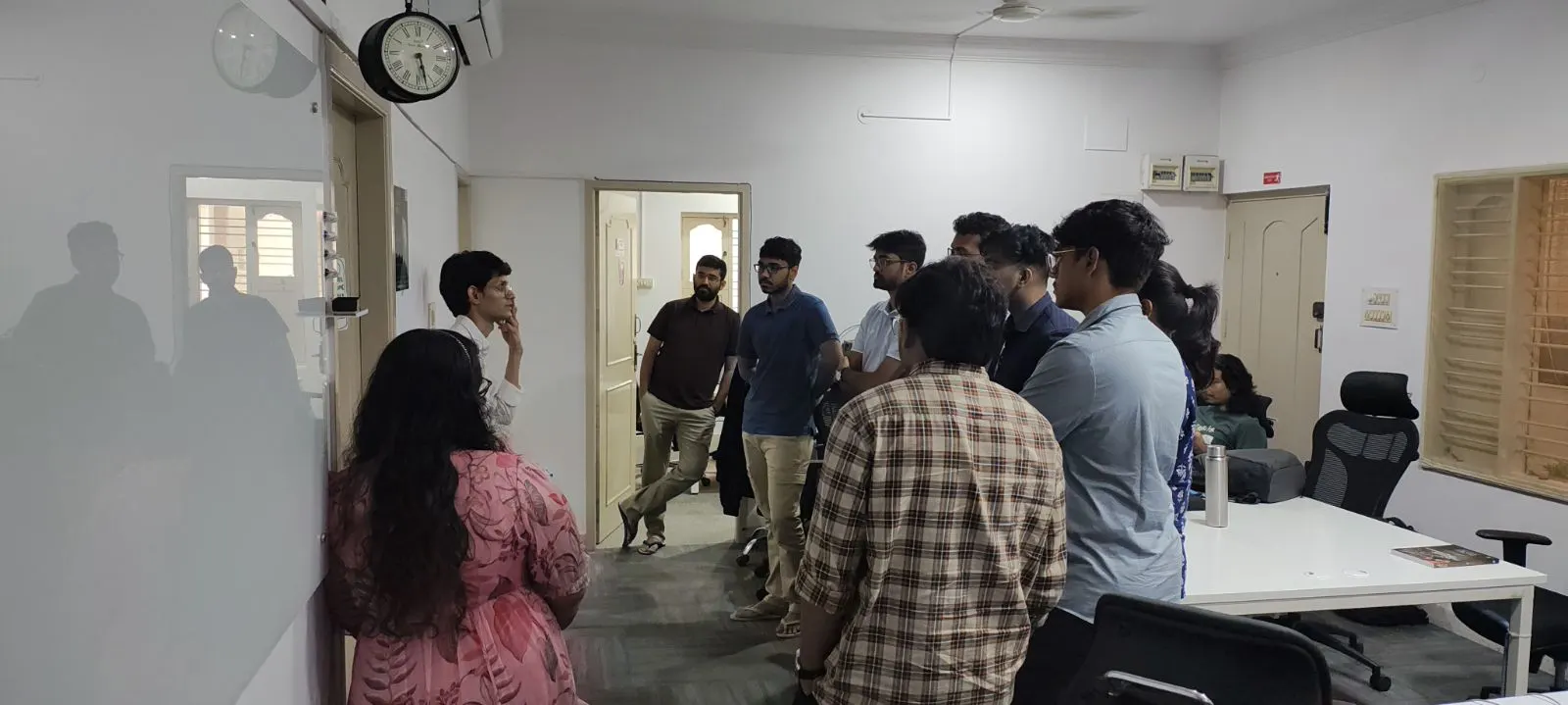
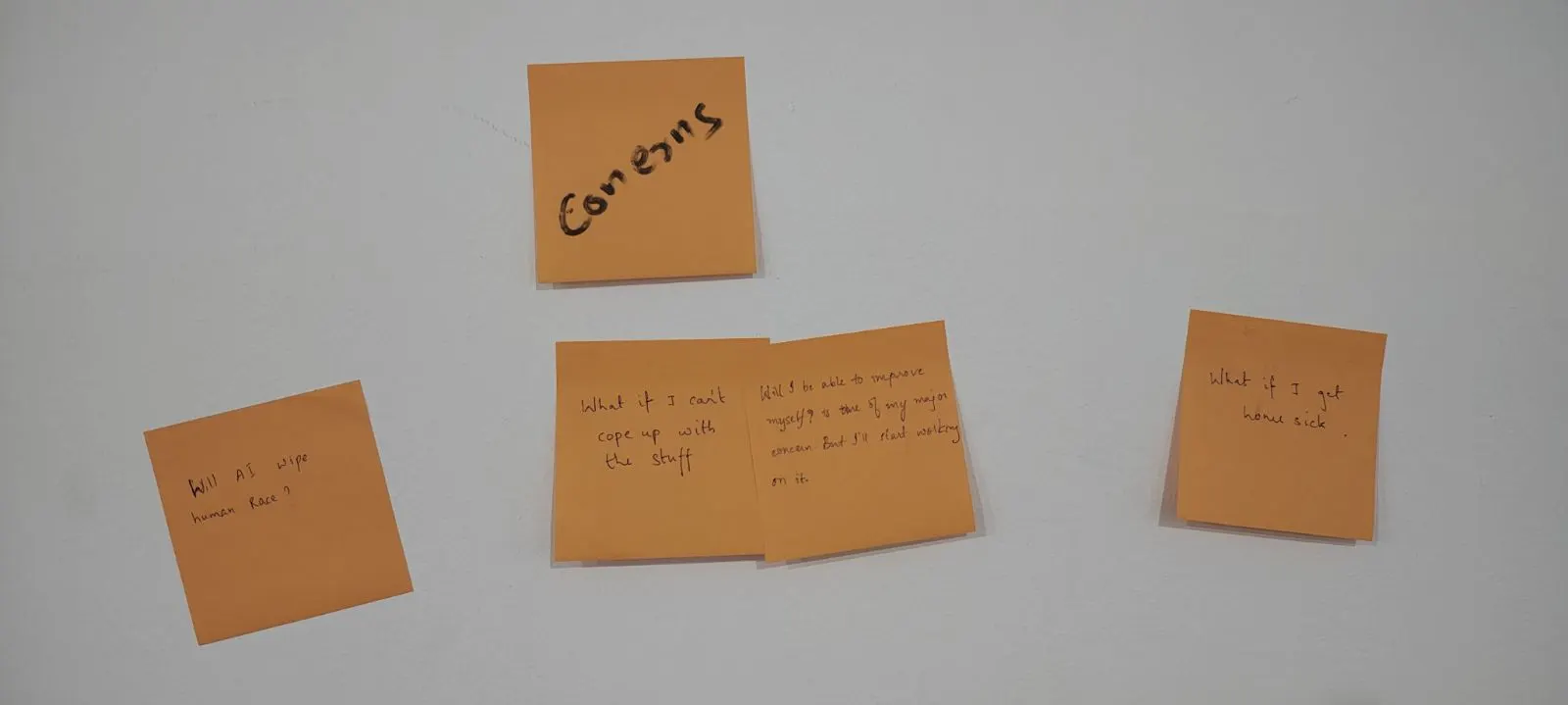
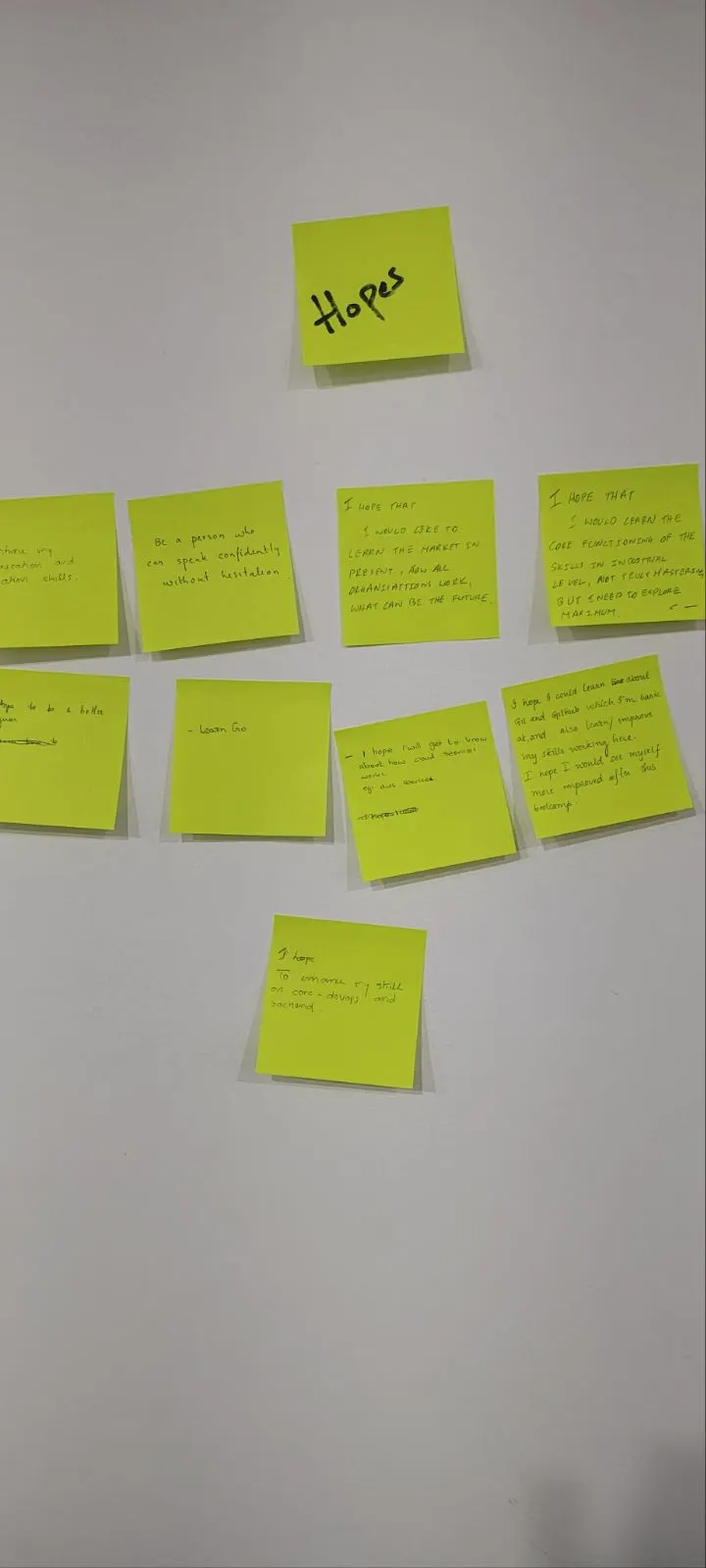
Week by week
Week 1
Foundations and culture
What you learn
Git as a team sport (branching, conflicts), first-principles thinking, agile ways of working and explaining a technical blocker clearly.
What you build
A rapid review on shared repositories.
Where you end up
You can work in a shared codebase without breaking the build, and say exactly where you're stuck.
Week 2
Clean code and testing
What you learn
KISS, YAGNI, SOLID and the test pyramid: unit, integration and end-to-end.
What you build
A refactoring workshop that turns spaghetti into something modular, and a TDD dojo.
Where you end up
Your code is readable, modular and proven by tests.
Week 3
Backend and systems
What you learn
REST and gRPC API design, concurrency models, Linux internals like processes and file I/O, and database optimisation.
What you build
A system design case study, such as a rate limiter or a distributed cache.
Where you end up
You can design a backend service that's efficient, not just working.
Week 4
Infra, DevOps and observability
What you learn
Infrastructure as code, CI/CD automation, metrics, logs and traces, and incident response.
What you build
Build a CI/CD pipeline for a mock service, then a dashboard with real alerts.
Where you end up
You understand where code runs, and how to tell when it's unwell.
Week 5
AI and consulting
What you learn
How LLMs work, reviewing AI-written code, validating AI output end to end, and the client side: standups, estimates, sprints and planning.
What you build
An AI audit (generate a solution, then find its bugs by hand) and client role-play.
Where you end up
AI is a tool you check, not a crutch. And you can run a standup with a client.
The house rules
AI comes later, on purpose.
AI tools are restricted for specific exercises in the early weeks. You learn what good looks like first, so you can spot when the AI gets it wrong.
Principles over syntax.
Frameworks change every year. Git, testing and architecture don't. We teach the things that will still matter in ten years.
Student to consultant.
The goal is ownership: understanding the business problem behind the ticket, not just closing it.
Production awareness.
Code doesn't end at the pull request. Everyone learns the full life of their code, including infrastructure, observability and cost.
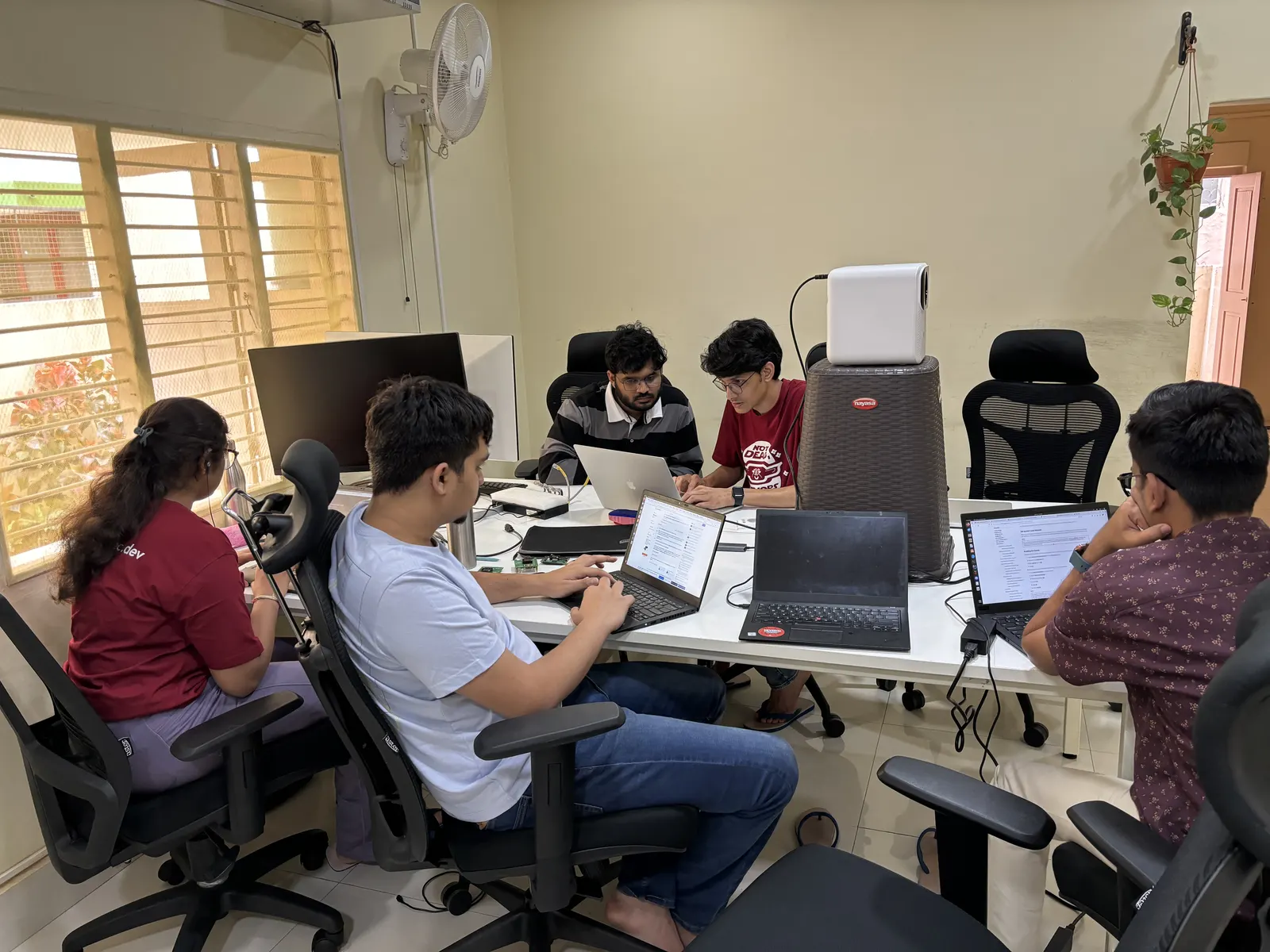
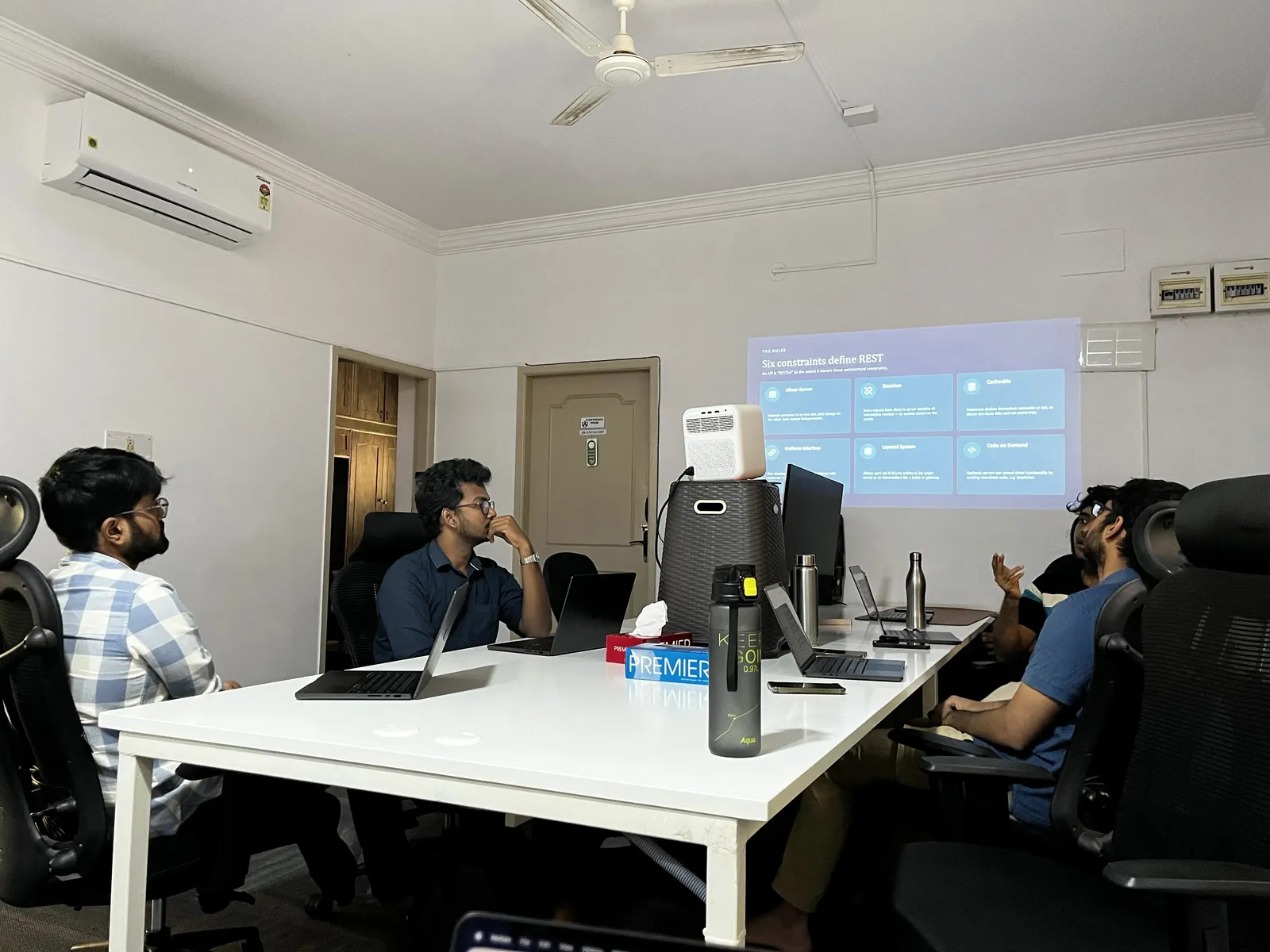
Then it gets real.
After the five weeks comes a capstone project built like real client delivery, alongside active shadowing on client work. Shadowing here means writing up what you learned from each client meeting, not just sitting quietly at the back.
Bootcampers also give tech talks to the whole team. Explaining something to a room of engineers is the fastest way to find out whether you really understand it.